256 words
1 min read

Export Drivers Using Windows PowerShell

By · Solutions Architect · Docker Captain · IBM Champion
Cover image for the post 'Export Drivers Using Windows PowerShell'

This article is for those looking for a detailed and clear guide on how to export drivers using Windows PowerShell.

The ability to export third-party drivers using PowerShell using the Export-WindowsDriver cmdlet was first introduced with Update 1 for Windows 8.1 and Windows Server 2012 R2. This great feature is also present on later operating systems from Microsoft.

Exported drivers can be useful for manual installation on new computers or using automated solutions. In addition, drivers can be added to the Windows installation image.

NOTE

The guide will discuss the export of drivers with their description.

We go into the system under an account with administrator rights.

On the keyboard, press the key combination “Win” and “x” and in the menu that opens, select “Windows PowerShell (Admin)”.
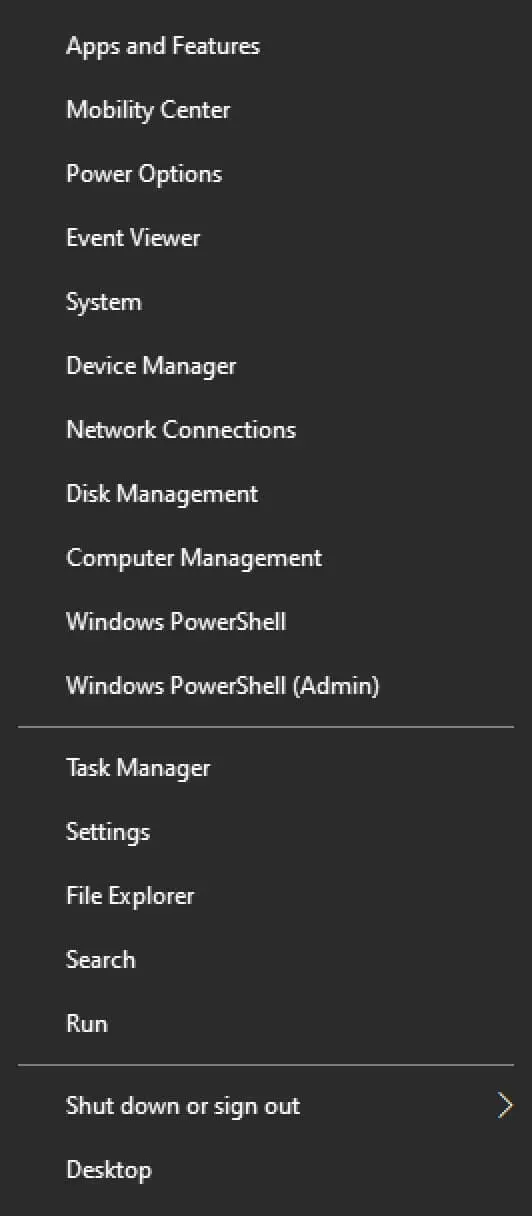
Export Drivers Using Windows PowerShell - Step 1

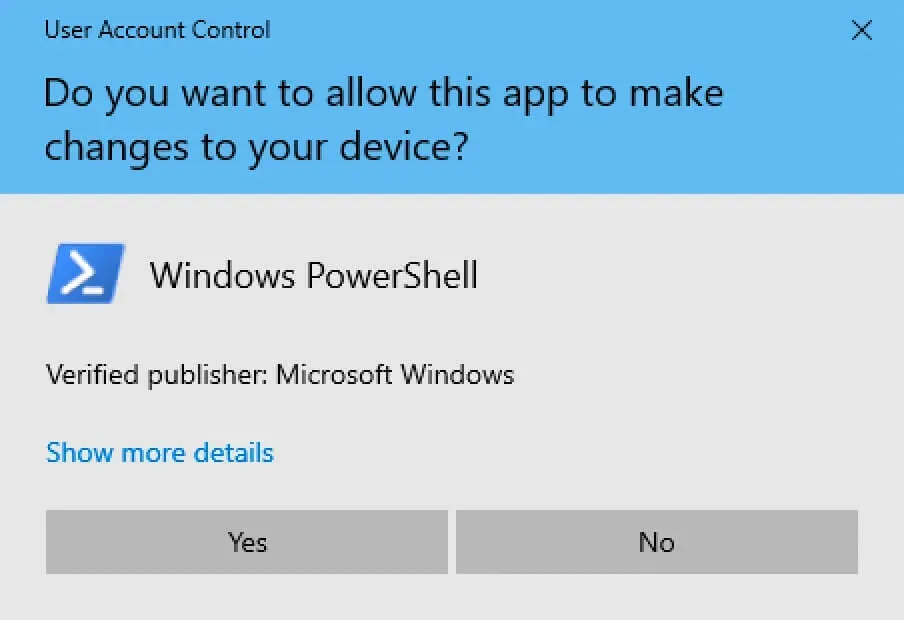
Click on the “Yes” button.

Export Drivers Using Windows PowerShell - Step 2

NOTE

In this manual, the drivers and their descriptions will be exported to the “Temp” folder on the “C” drive. The description of the exported drivers will be saved to the “drivers.txt” file.

Let’s prepare the variable using the command:

Terminal window
$drivers = Export-WindowsDriver -Online -Destination C:\Temp\drivers
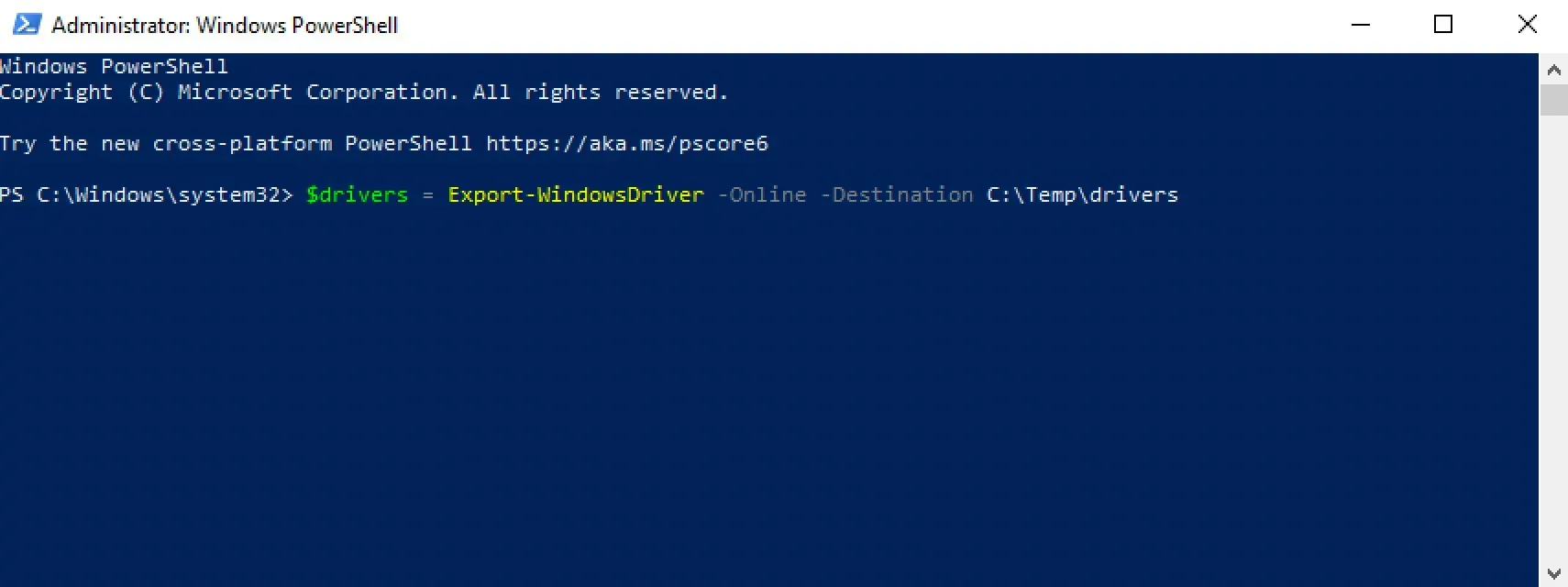
Export Drivers Using Windows PowerShell - Step 3

We export the drivers using the command:

Terminal window
$drivers | ft ProviderName, ClassName, Date, Version -auto | Out-File C:\Temp\Drivers\drivers.txt
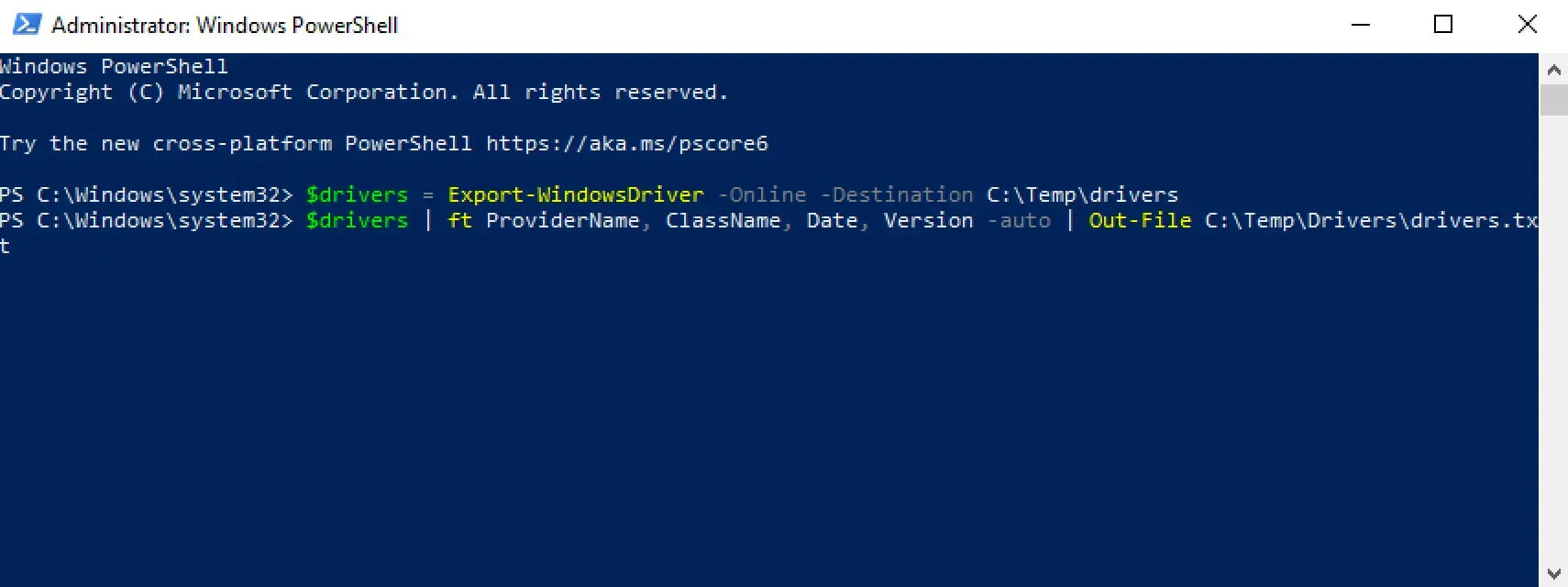
Export Drivers Using Windows PowerShell - Step 4

The drivers and their descriptions have been successfully exported to the “Temp” folder on the “C” drive.
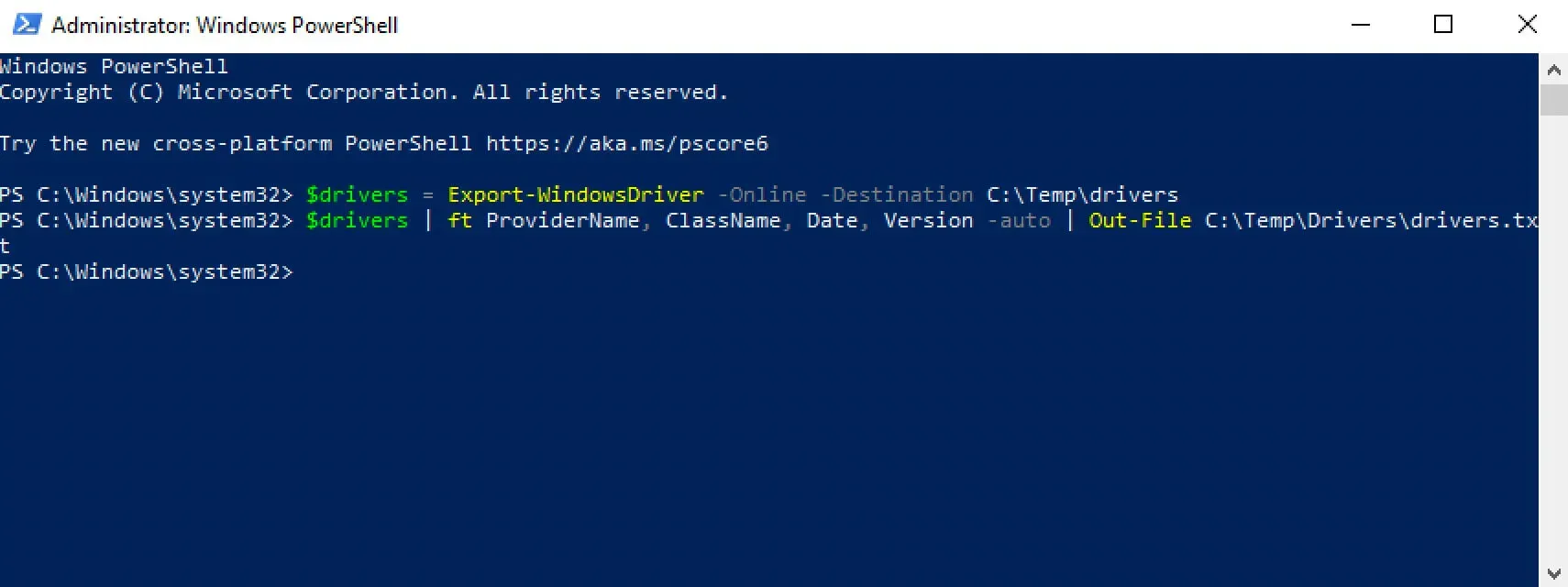
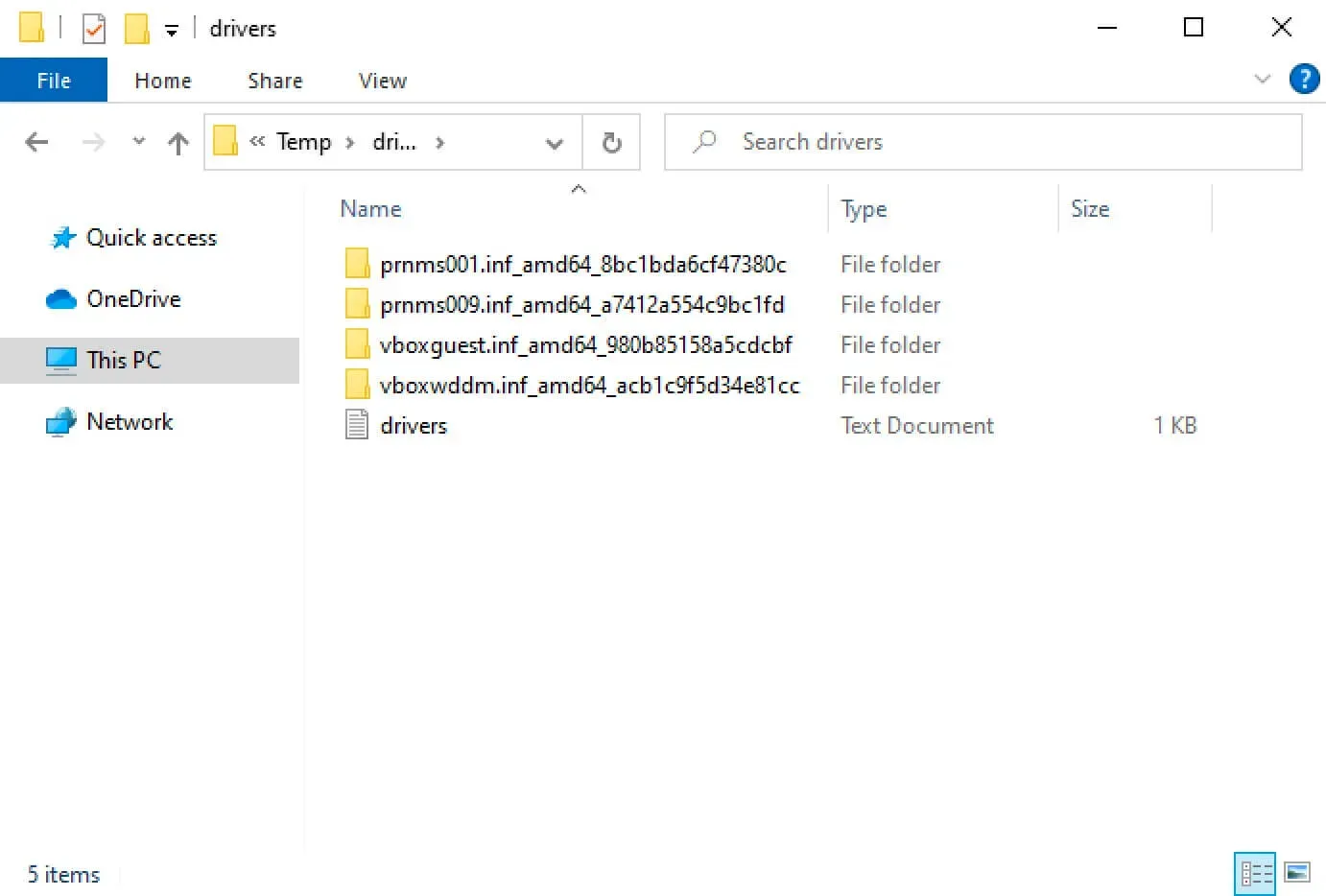
Export Drivers Using Windows PowerShell - Step 5

Export Drivers Using Windows PowerShell - Step 6


Vladimir Mikhalev

Docker Captain  ·  IBM Champion  ·  AWS Community Builder

The Verdict — production-tested analysis on YouTube.

The Verdict

Inconvenient truths about shipping in the AI era

Container security, platform engineering, and the agentic shift — tested in production, argued without the hype. The verdict reaches your inbox the moment there's one worth sending.

Related Posts

Same category
  1. 1
    Recovering a Corrupt Exchange Database with Stellar Repair — Real-World Lab Test
    SysAdmin & IT Pro · We deliberately broke an Exchange 2019 server to see if Stellar Repair for Exchange could recover a dirty-shutdown EDB file. Step-by-step recovery process, lab setup, and lessons learned.
  2. 2
    Distinctions Between Terminal, Command Line, Shell, and Prompt
    SysAdmin & IT Pro · Learn the differences between terminal, command line, shell, and prompt in Linux. A beginner-friendly guide to essential CLI concepts and tools.
  3. 3
    Install Ubuntu Server 22.04 LTS
    SysAdmin & IT Pro · Step-by-step guide to install Ubuntu Server 22.04 LTS. Covers language, disk setup, OpenSSH, user creation, and system configuration for beginners.
  4. 4
    Install OTRS on Ubuntu Server
    SysAdmin & IT Pro · Comprehensive guide to installing OTRS Community Edition on Ubuntu Server. Learn to configure PostgreSQL, Apache, SSL with Let's Encrypt, and launch OTRS securely.

Random Posts

Random
  1. 1
    Inside the Builders Era — How Developers Stay in Control of AI with GitKraken as the Core Tool
    Opinion & Culture · How developers stay in control of AI in the Builders Era — using expert supervision, clean Git workflows, and GitKraken to keep speed, quality, and reliability.
  2. 2
    The Intake Gate Your CISO Is Missing — 300 Million AI Chat Messages Were Public by Default
    AI & MLOps · Over half of AI-enabled apps on major backends carry severe misconfigurations. A hands-on analysis of the 300M-message Firebase breach, the insecure default that caused it, and the 3-layer Operational Discipline Protocol — with specific tooling — to shut down Agent Sprawl before regulators do it for you.
  3. 3
    Install Confluence Using Docker Compose
    Self-Hosting · Learn how to install Confluence using Docker Compose with Traefik and Let's Encrypt. Step-by-step setup for secure, self-hosted Atlassian documentation.
  4. 4
    Install Keycloak Using Docker Compose
    Self-Hosting · Learn how to install Keycloak using Docker Compose with Traefik and Let's Encrypt. Step-by-step setup for secure identity and access management on your server.
Export Drivers Using Windows PowerShell
https://heyvaldemar.com/export-drivers-using-windows-powershell/
Author
Vladimir Mikhalev
Published
2021-02-10
License
CC BY-NC-SA 4.0