
Install Minecraft Server Using Docker Compose
By Vladimir Mikhalev · Docker Captain · CNCF Ambassador · IBM Champion
Want to run your own Minecraft Server with Docker Compose? This is the guide. Detailed, no fluff.
A Minecraft Server is a player-owned or business-owned multiplayer game server for the 2009 Mojang Studios video game Minecraft. One thing to keep straight: people say “server” but usually mean a network of connected machines, not one box.
TIPArchitecture Context
Choose a self-hosted Minecraft server when you need full control over mods, plugins, world configuration, and player limits. Minecraft Realms offers a managed alternative with simpler setup but limited customization and a 10-player cap. Self-hosting is the right approach when you need modded gameplay, custom server properties, or want to avoid per-player subscription costs.
💾 You can find the repository used in this guide on GitHub.
CAUTIONYou will need A-type records in the external DNS zone, which point to the IP address of your server where Minecraft Server is installed. If you have created these records recently, you should wait before starting the installation of the services. Full replication of these records between DNS servers can take from a few minutes to 48 hours or even longer in rare cases.
NOTEAlternatively, you can use the public static IP address of your server to connect directly.
IMPORTANTDocker Engine and Docker Compose must be installed on the server.
For a step-by-step guide on installing Docker Engine on Ubuntu Server, see Install Docker Engine and Docker Compose on Ubuntu Server
IMPORTANTOpenSSH must be installed on the server, and port 22 must be open to be able to connect to the server using the SSH protocol.
No OpenSSH yet? Install it with:
sudo apt install openssh-serverNOTETo connect to the server from a Windows system, you can use tools like PuTTY or MobaXterm.
NOTEThis guide walks you through connecting to a server with the iTerm2 terminal emulator on macOS.
CAUTIONYou will need to open the following TCP ports for access to the services:
- TCP port 25565 - to connect Minecraft clients to the server.
SSH into the box where Minecraft Server will live.
First job is the network. Your services need one to talk over.
Create it for Minecraft Server like so:
docker network create minecraft-server-network 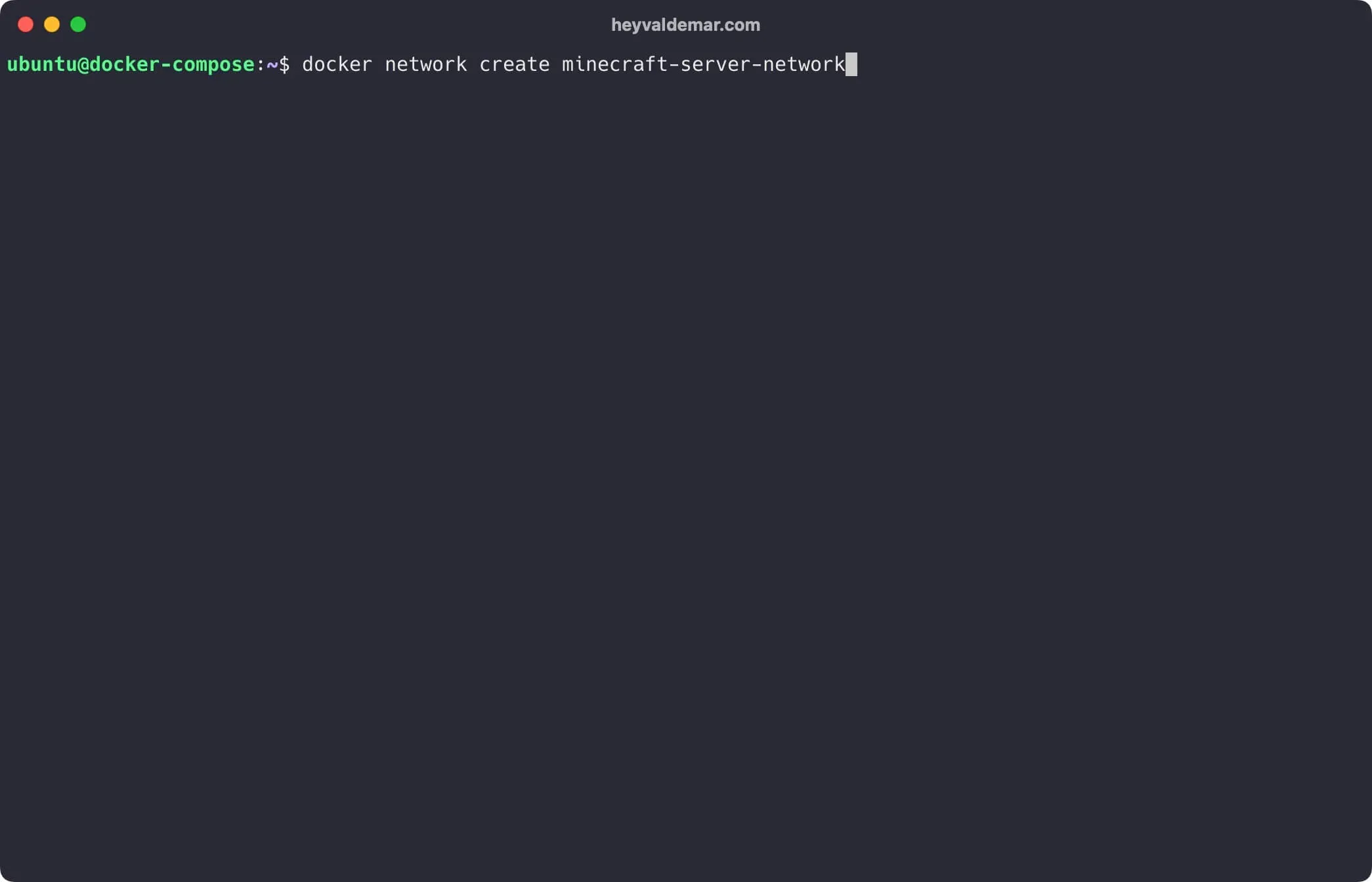
Now clone the repository. It carries the configuration files, and those files hold everything Minecraft Server needs to run.
Clone it with:
git clone https://github.com/heyvaldemar/minecraft-server-docker-compose.git 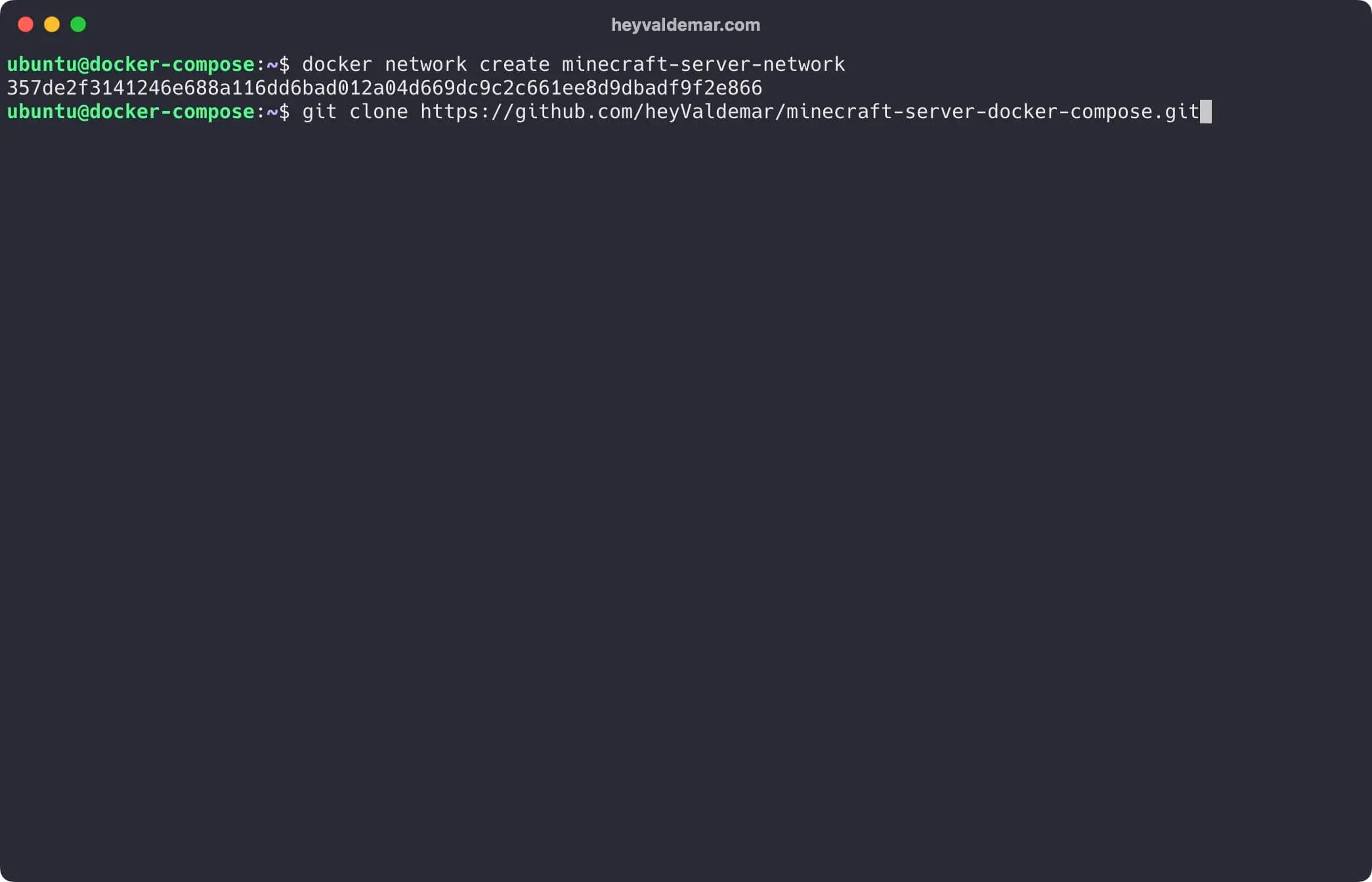
Step into the repository directory:
cd minecraft-server-docker-compose 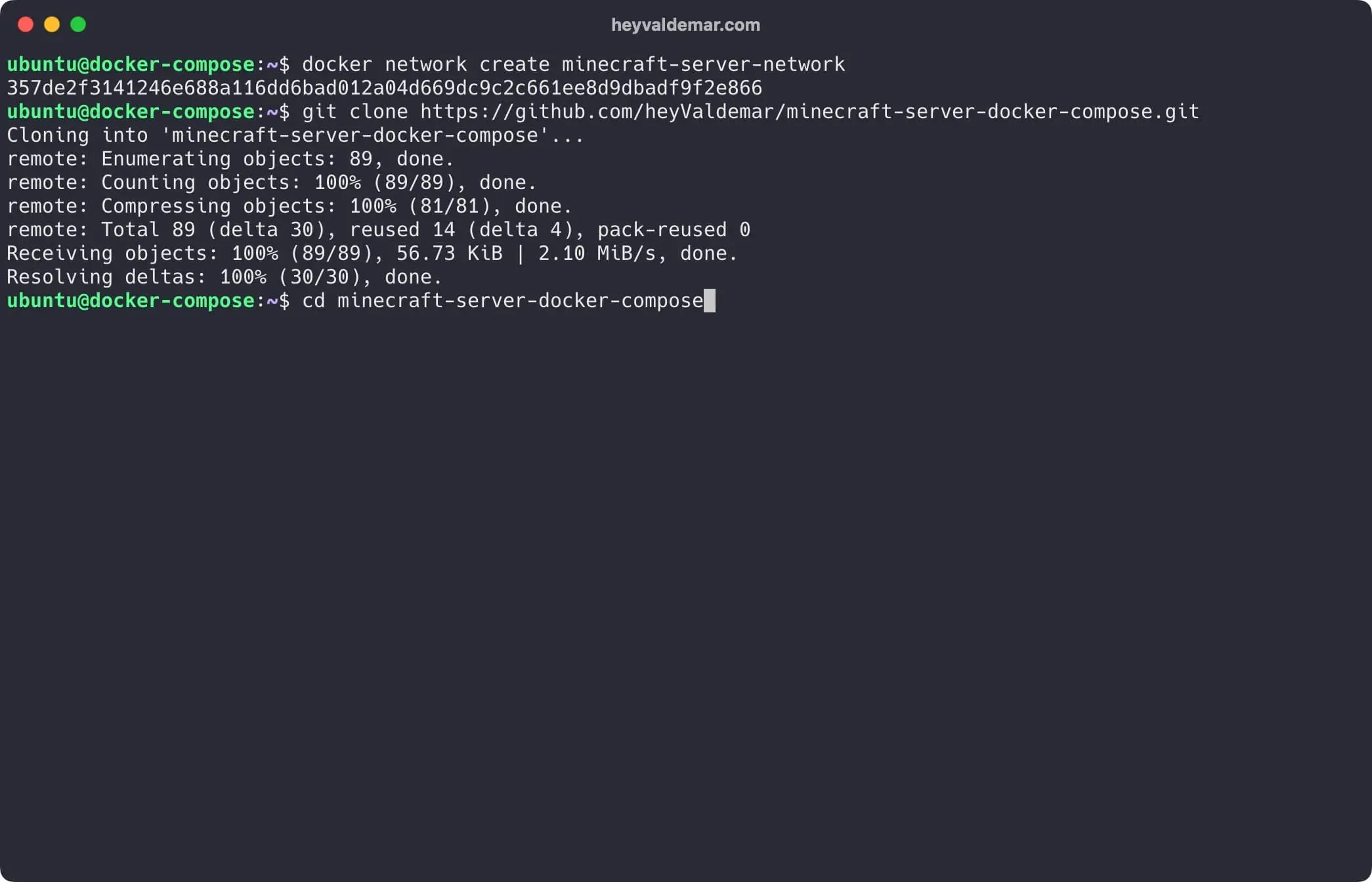
Now edit the .env file. Set the variables to whatever your setup calls for.
NOTEThe
.envfile andpluginsfolder should be in the same directory asminecraft-server-docker-compose.yml.
Time to start it up:
docker compose -f minecraft-server-docker-compose.yml -p minecraft-server up -d 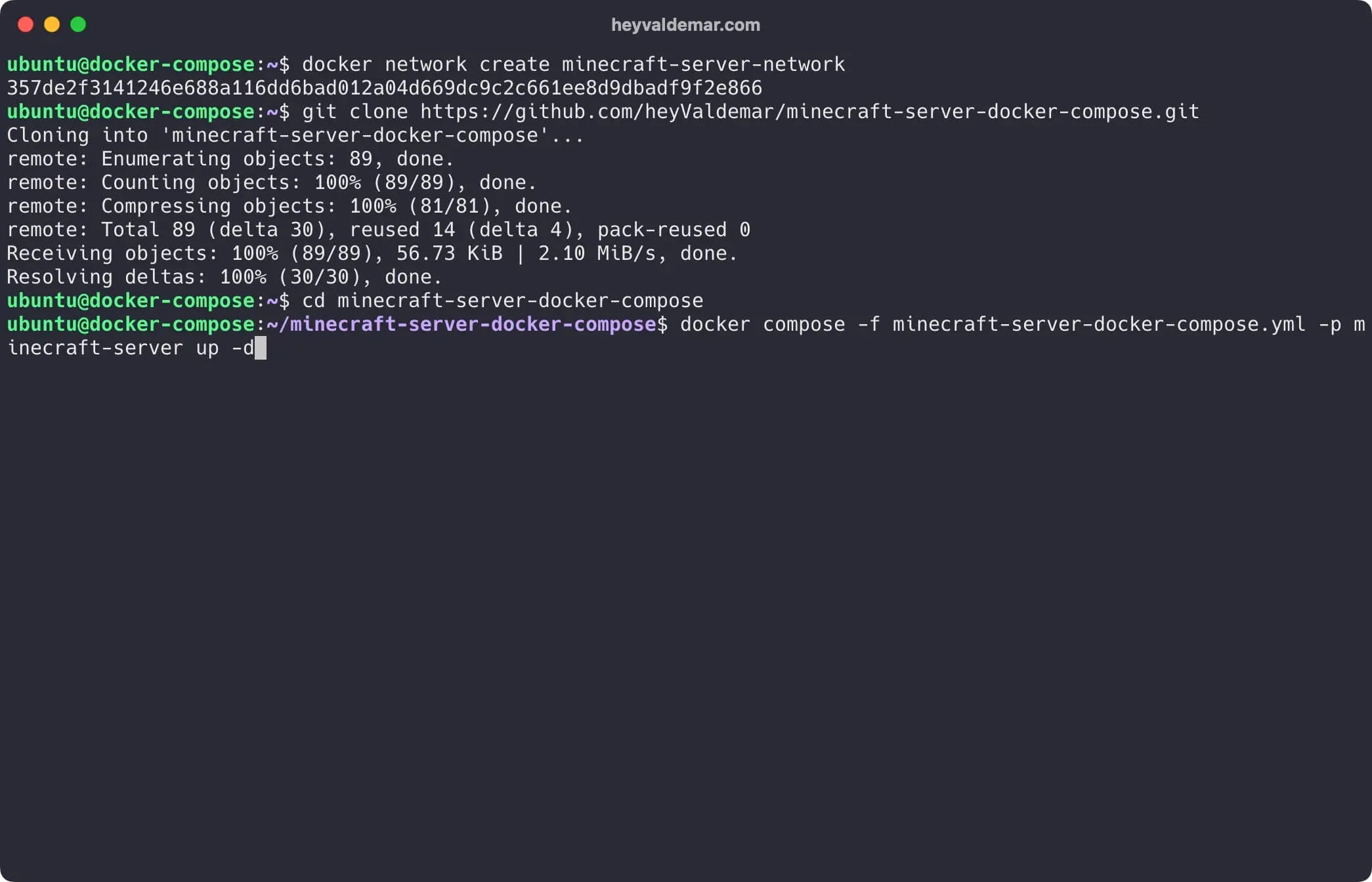
CAUTIONTo connect to your Minecraft server, enter the domain name into the Minecraft client. This domain name should point to the IP address of your server where the Minecraft Server is installed. Alternatively, you can use the public static IP address of your server to connect directly.
CAUTIONBefore using a domain name, ensure you have set up A-type records in your external DNS zone that point to this IP address. If you’ve recently created these records, it’s advisable to wait before starting the installation of the services. DNS record propagation can vary, taking anywhere from a few minutes to 48 hours, and in rare cases, even longer.