
What is DevOps?
By Vladimir Mikhalev · Docker Captain · CNCF Ambassador · IBM Champion
There was a time when devs wrote code and threw it over the wall like a grenade. Ops teams caught it, if they were lucky, then duct-taped it into production and prayed nothing caught fire.
Spoiler: stuff caught fire. Often.
That broken model is what gave birth to DevOps. Not some trendy buzzword. Not a fancy job title. It was a response to pain, the kind you only understand once you’ve been paged at 3AM because someone’s “worked on my machine” code just killed your live database.
No fluff. Just facts.
Dev vs Ops: A Dysfunctional Relationship
Before DevOps, here’s how it usually went down:
- Dev team: Push new features as fast as humanly possible.
- Ops team: Block new changes to keep uptime at 99.99%.
Same company. Totally different goals. Zero shared context.
The result? Fragile handoffs, late-night deploy disasters, and finger-pointing marathons during postmortems.
Here’s the classic line:
“It worked on my machine.”
Translation? “Not my problem.”
Enter DevOps: Collaboration by Necessity
DevOps exists because speed without stability is chaos, and stability without speed is irrelevance.
It’s not just about tools. It’s about mindset. A culture shift.
What DevOps really means
- Developers own more of production.
- Ops people get involved earlier in the lifecycle.
- Everyone stops treating deployment like defusing a bomb.
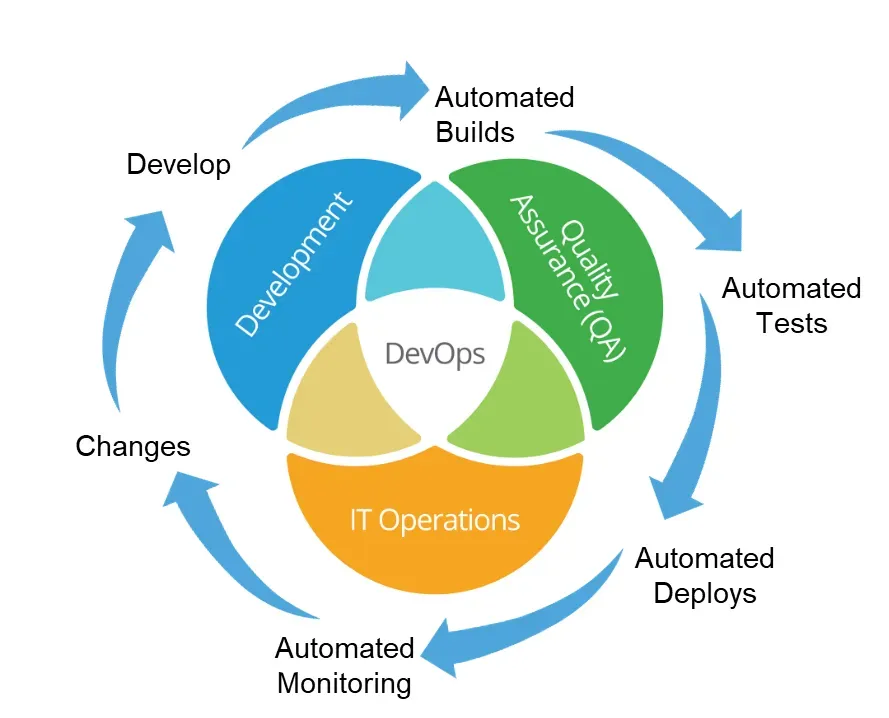
DevOps unites developers, sysadmins, QA, and security under a shared mission: ship better software, faster, and keep it running.
The DevOps Pillars (From People Who’ve Been in the Trenches)
John Willis (co-author of The DevOps Handbook) gave us the CAMS model:
Culture, Automation, Measurement, and Sharing
That’s the spine of real DevOps. Not Kubernetes. Not YAML. People first. Then tools.
Brian Dawson from CloudBees adds another lens:
People and culture, process and practice, tools and technology
Notice how “tools” is last? That’s not an accident.
Too many teams buy Jenkins and call it DevOps. That’s like buying a guitar and calling yourself a musician.
DevOps in Practice: What It Looks Like When It Works
When DevOps clicks, you get:
- CI/CD pipelines that catch bugs before prod ever sees them
- Automated tests that run on every pull request
- Deploys on demand, not “Fridays only” horror shows
- Monitoring and alerts wired in from day one
- Blameless postmortems that actually fix things instead of fixing blame
And the numbers back it up. Companies doing DevOps right:
- Deploy faster (daily, not quarterly)
- Fail less often, and recover quicker when they do
- Have happier engineers who don’t live on pager duty
It’s Not Optional Anymore
You don’t “try” DevOps like a weekend side project. You do it because modern software delivery demands it.
If you’re deploying weekly by hand, praying nothing breaks, and manually SSHing into servers to debug? You’re not just behind. You’re building a future incident.
“DevOps is how successful companies industrialize software delivery.” — Brian Dawson, CloudBees
In other words: it’s how grown-ups ship software now.
TL;DR
- Devs and Ops used to be siloed. That broke everything.
- DevOps = shared ownership, faster feedback, and automation everywhere.
- Tools matter, but culture matters more.
- Done right, DevOps improves release speed and system reliability.
- You’re not “too small” for DevOps. You’re just early.
Next Step
Want to start? Here’s where to look:
- Set up a real CI pipeline. Jenkins, GitHub Actions, GitLab, whatever.
- Make one thing automatic: tests, builds, deploys, doesn’t matter. Start somewhere.
- Run a postmortem without blaming anyone. Learn. Repeat.
And if you’re still arguing about who owns uptime? Congratulations: you’re overdue for a DevOps intervention.